
April 9, 2026
Bend Rental Market: Q1 2026
Bend’s single-family rental market posted strong numbers in Q1 2026. Average SFH rents climbed to an estimated $2,967 for the quarter, up 7.9% from Q4 2025’s $2,750 average, and the March point-in-time reading came in at $3,100, an 8.8% increase year-over-year. Demand for single-family rentals remains robust, with homes leasing faster and commanding significantly higher rents than their multifamily counterparts. (For a look at how the market was shaping up earlier this year, see our January 2026 rental market update.)
But there’s a supply story developing that deserves just as much attention as the rent growth. Bend permitted 1,756 total housing units over the past 12 months, a 173% increase over the prior year. While the heaviest concentration is in multifamily (1,110 units), single-family permits also jumped 26.4% to 646 units. That combined pipeline represents roughly 4.1% of all Bend households, and the bulk of it will deliver between now and the end of 2027.
The takeaway: SFH fundamentals look strong today, but the competitive landscape is shifting. Landlords who act strategically over the next two quarters will be best positioned when that new supply starts hitting the market.
Rents: Single-Family Is Running Hot
Single-family rents grew 7.9% quarter-over-quarter on a quarterly average basis, climbing from $2,750 in Q4 2025 to $2,967 in Q1 2026. The March snapshot was even more striking at $3,100, up $300 (10.7%) from the December 2025 estimate and $250 (8.8%) from March 2025.
The month-over-month move from February to March alone was +$150 (+5.1%), which signals that rent growth was accelerating through the quarter rather than leveling off. That momentum will likely carry into Q2.
The Divergence: Single-Family Outpaces Multifamily
| Single-Family (SFH) | Multifamily (MFH) | |
|---|---|---|
| Q1 Average Rent | $2,967 | $1,849 |
| Quarter-over-Quarter Growth | +7.9% | +0.3% |
| Days on Market (Active) | 70 | 97 |
The gap between single-family and multifamily rents widened significantly in Q1. The SFH premium over multifamily in-place rents expanded to 60.5%, up from 49.3% in Q4 2025. That’s an 11.2 percentage point jump in a single quarter. Multifamily rents, by contrast, were essentially flat quarter-over-quarter at $1,849 (+0.3%), even as SFH rents surged.
This divergence tells us two things. First, demand for single-family rentals specifically (the space, the yard, the lifestyle) remains strong enough to support rapid rent growth. Second, the multifamily market is already absorbing competitive pressure that hasn’t yet reached the SFH segment. That pressure is worth watching, because at a $1,250+ monthly spread between SFH and MFH, some portion of tenants will eventually make the trade-down calculation, especially as brand-new apartment product comes online with modern finishes and move-in concessions. (Rent premiums vary significantly by area. Our breakdown of the highest-rent neighborhoods in Bend shows where that pricing power is concentrated.)
Absorption and Days on Market
Bend recorded 486 single-family leases signed in the trailing 30 days as of March, against 161 active listings on Zillow and 565 total unleased units in the broader database. That translates to roughly 1.2 months of inventory at the current absorption pace, a healthy number that indicates steady demand without signaling the kind of ultra-tight conditions that would justify aggressive rent increases.
Active SFH listings show an average of 70 days on market, compared to 97 days for multifamily units in Bend. Even at a significant price premium, single-family homes are finding tenants 27 days faster than apartments. That’s a strong demand signal.
Occupancy
Absorption
Occupancy and Vacancy: What the Data Actually Tells Us
Estimating SFH Vacancy
One of the persistent gaps in Bend rental market reporting is the lack of a published single-family home vacancy rate. Unlike multifamily, where property management databases track occupancy across large portfolios, SFH rentals are fragmented across individual owners, making a definitive number hard to pin down. But by cross-referencing several data sources, we can build a reasonable estimate.
Here’s the math. According to the U.S. Census Bureau’s American Community Survey (2022 5-year estimates), Bend has approximately 16,337 renter-occupied housing units. Our database shows 8,071 multifamily units in the city. Subtracting multifamily from the total rental stock gives us a rough SFH rental universe of 8,000 to 10,000 units, depending on how you account for post-2022 construction and units that straddle the SFH/MFH line (duplexes, ADUs, etc.). HUD’s 2021 Comprehensive Housing Market Analysis for Bend-Redmond supports this range, noting that approximately 64% of renter households in the metro area live in single-family homes.
With 565 unleased SFH units in our database as of March 2026, that puts estimated SFH vacancy at roughly 5.7% to 7.1%, depending on which stock estimate you use. For context, HUD reported the professionally managed SFH vacancy rate at just 2.1% in mid-2021. The shift from 2% to the 6-7% range reflects real loosening in the market, consistent with the supply growth we’ve tracked over the past two years.
That said, SFH vacancy is still far healthier than multifamily’s 12.2%. Single-family homes are leasing faster (70 vs. 97 days on market), absorbing at a healthy pace (486 leases per month), and commanding growing rent premiums. The SFH market has softened from its pandemic-era tightness, but it hasn’t tipped into the kind of oversupply that multifamily is now facing.
Multifamily Occupancy (for Market Context)
Bend’s multifamily occupancy held at 87.8% in Q1 2026, essentially unchanged from Q4 2025’s 87.7% and up 0.7 percentage points from Q1 2025’s 87.1%. For context, a healthy rental market typically runs 93-95% occupancy, so 87.8% confirms that the broader Bend rental market remains tenant-favorable, with enough available inventory to give renters leverage. This continues a trend we flagged in our 2025 real estate market forecast.
The quarter-over-quarter flatness is itself notable. Occupancy isn’t deteriorating further, but it’s also not recovering toward healthier levels. With 1,110 multifamily units in the pipeline, the path back to tighter conditions is a long one. Apartment operators running at 87.8% will be aggressive with pricing and concessions to fill units, and that competitive energy spills over into the SFH market even if single-family demand remains relatively stronger.
Tenant Retention: A Data Gap Worth Acknowledging
The rental database does not track single-family home retention or tenancy length. This is a meaningful gap, and we’d rather be transparent about it than paper over it with false precision.
What we do know: multifamily retention in Bend runs at 64.2%, meaning about 36% of multifamily tenants turn over annually. That trails Oregon’s statewide average of 67.1% by nearly 3 percentage points, consistent with a market where tenants have options and are willing to move.
Nationally, single-family tenants tend to stay 20-30% longer than multifamily tenants due to family stability, school enrollment, and higher moving costs. Applied to Bend’s multifamily data, that suggests an estimated SFH tenancy of 40 to 44 months (3.3 to 3.7 years). This is a rough industry proxy, not a Bend-verified figure, and we flag it accordingly.
For practical purposes, SFH landlords should assume meaningful annual turnover and plan accordingly. Every vacancy event carries real cost: lost rent, make-ready expenses, marketing time, and the risk of re-leasing into a softer market. That math argues strongly for prioritizing retention over rent maximization in the quarters ahead. A proactive property management approach can help minimize these costs through strategic renewal timing and competitive pricing.
The Supply Pipeline: Where the Story Turns
This is the most important section in the report.
The Catalyst: A 735% Supply Shock
Bend permitted 646 single-family homes over the past 12 months, up 26.4% from 511 in the prior period. Assuming a typical 12-to-18-month construction timeline, that translates to roughly 388 units delivering in 2026 and 258 in 2027. That’s a notable increase in SFH supply, but it’s measured growth, not a flood.
The multifamily numbers are where things get dramatic. Bend permitted 1,110 multifamily units over the same period, a 735% increase over the prior period’s 133 units. Those 1,110 units represent 13.8% of the existing multifamily stock (8,071 units), with roughly 666 units expected to deliver in 2026 and 444 in 2027.
Multifamily
1,100+ units
Rentals
$1,250 premium
The Ripple Effect: Cross-Market Competition
New multifamily product competes for the same renter pool. When hundreds of new apartments open with modern amenities and aggressive lease-up pricing (expect 1-2 months of free rent to become common), some tenants currently renting single-family homes at $3,100 per month will weigh the option of moving into a brand-new apartment at $1,850.
The SFH segment does have structural advantages: yards, privacy, dedicated parking, and the lifestyle appeal that draws families and longer-term tenants to Bend’s top rental neighborhoods. These differentiators won’t disappear, but they’ll need to work harder to justify a 60%+ premium as the supply picture shifts.
Strategic Outlook and Recommendations
For Current Landlords
For Prospective Investors
The current 8.8% year-over-year rent growth is real, but it’s not sustainable once 1,750+ new housing units start delivering. It’s also worth remembering that Oregon’s rent stabilization law caps annual increases at 7% plus CPI (roughly 9.5% for 2026), which limits how aggressively landlords can adjust rents even in strong markets. Better to retain a good tenant at 95% of peak market rent than to push for 105% and face months of vacancy in a softening environment. If you’d like to discuss how these numbers apply to your specific property, reach out to our team.
The Quarter-by-Quarter Outlook
Data Sources and Transparency
This report draws from multiple sources: Zillow rental market data (updated March 31, 2026) for SFH-specific metrics, a comprehensive rental database (snapshot March 21, 2026) for multifamily benchmarks, permit data, and retention figures, U.S. Census Bureau ACS (2022 5-year estimates) for housing stock totals, and HUD’s Bend-Redmond Comprehensive Housing Market Analysis (2021) for SFH rental stock distribution. Building permit data comes from the City of Bend Community Development department and Deschutes County.
Where the data is strong: SFH rents, SFH absorption pace, SFH days on market, multifamily occupancy/vacancy, multifamily retention, and permit activity all come from direct data sources.
Where the data is estimated: SFH vacancy is derived from cross-referencing Census housing stock totals with our database’s unleased inventory count (see methodology note above). We do not have SFH-specific bedroom-level rent breakdowns or SFH retention/tenancy data. Where multifamily data is used as a proxy, it is clearly labeled throughout this report. The $278 gap between Zillow’s March SFH figure ($3,100) and the database’s SFR in-place average ($2,822) reflects methodological differences: Zillow captures current asking rents on active listings, while the database reflects in-place rents across existing leases. Both are useful for different purposes.
We believe transparent reporting, including acknowledging what we don’t know, builds more trust than filling gaps with false precision. For more market insights and landlord resources, visit the Legacy PM blog.

Kolby Knickerbocker


Redmond Rental Market: August 2026
September 10, 2026 Redmond Rental Market: August 2026 Home Central Oregon Rental Market Report · August 2026 Monthly market report from Legacy Property Management The

Sisters Rental Market: August 2026
September 10, 2026 Sisters Rental Market: August 2026 Home Central Oregon Rental Market Report · August 2026 Monthly market report from Legacy Property Management The

Bend Rental Market: August 2026
September 10, 2026 Bend Rental Market: August 2026 Home Central Oregon Rental Market Report · August 2026 Monthly market report from Legacy Property Management The

Bend Rental Market: July 2026
August 6, 2026 Bend Rental Market: July 2026 Home Bend Rental Market July 2026: SFH Rents, Vacancy & Trends Central Oregon Rental Market Report ·

Sisters Rental Market: July 2026
August 6, 2026 Sisters Rental Market: July 2026 Home Sisters OR SFH Rental Market Report: July 2026 Central Oregon Rental Market Report · July 2026
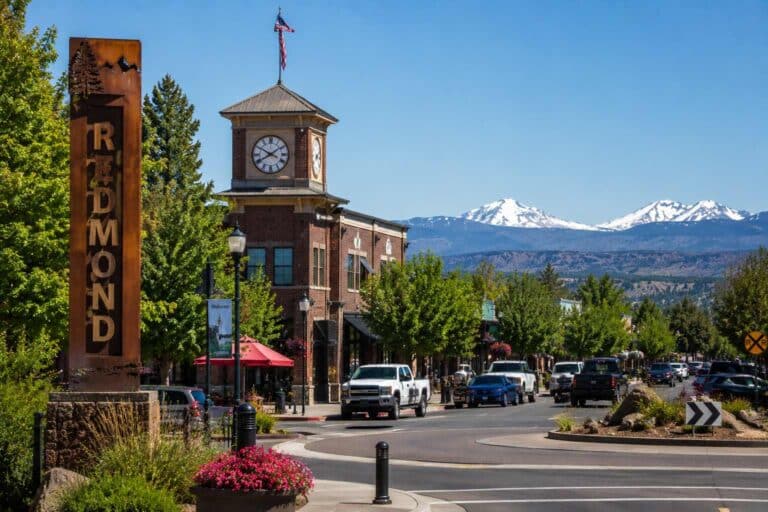
Redmond Rental Market: July 2026
August 6, 2026 Redmond Rental Market: July 2026 Home Redmond Rental Market July 2026: SFH Rent, Vacancy & DOM Central Oregon Rental Market Report ·
Contact Us
Let's Discuss Your Property Needs
OUR DIRECT CONTACT INFO
