
A vacant rental property sounds simple enough on the surface. No tenants, no maintenance calls, no drama. But the reality is the opposite. Managing vacant properties in Bend is one of the most underestimated risks a property owner can face, and the longer that vacancy stretches, the more that risk compounds.
Bend’s rental market has shifted meaningfully over the past two years. Multifamily vacancy rates climbed above 10% in 2024 and stayed there into 2025, according to CoStar data cited in The Bend Bulletin, roughly twice the 15-year historical average. That means more units sitting empty for longer than owners anticipated. And while the single-family rental segment tends to run tighter, no property owner in Central Oregon is immune to a vacancy that runs longer than planned.
Whether your home is between tenants, undergoing renovations, or sitting on the market, the risks during that window are real, and most landlords are not fully prepared for them.
The Financial Cost Starts Day One
The first instinct when a property goes vacant is to focus on lost rent. That’s a reasonable concern, but it’s only part of the picture.
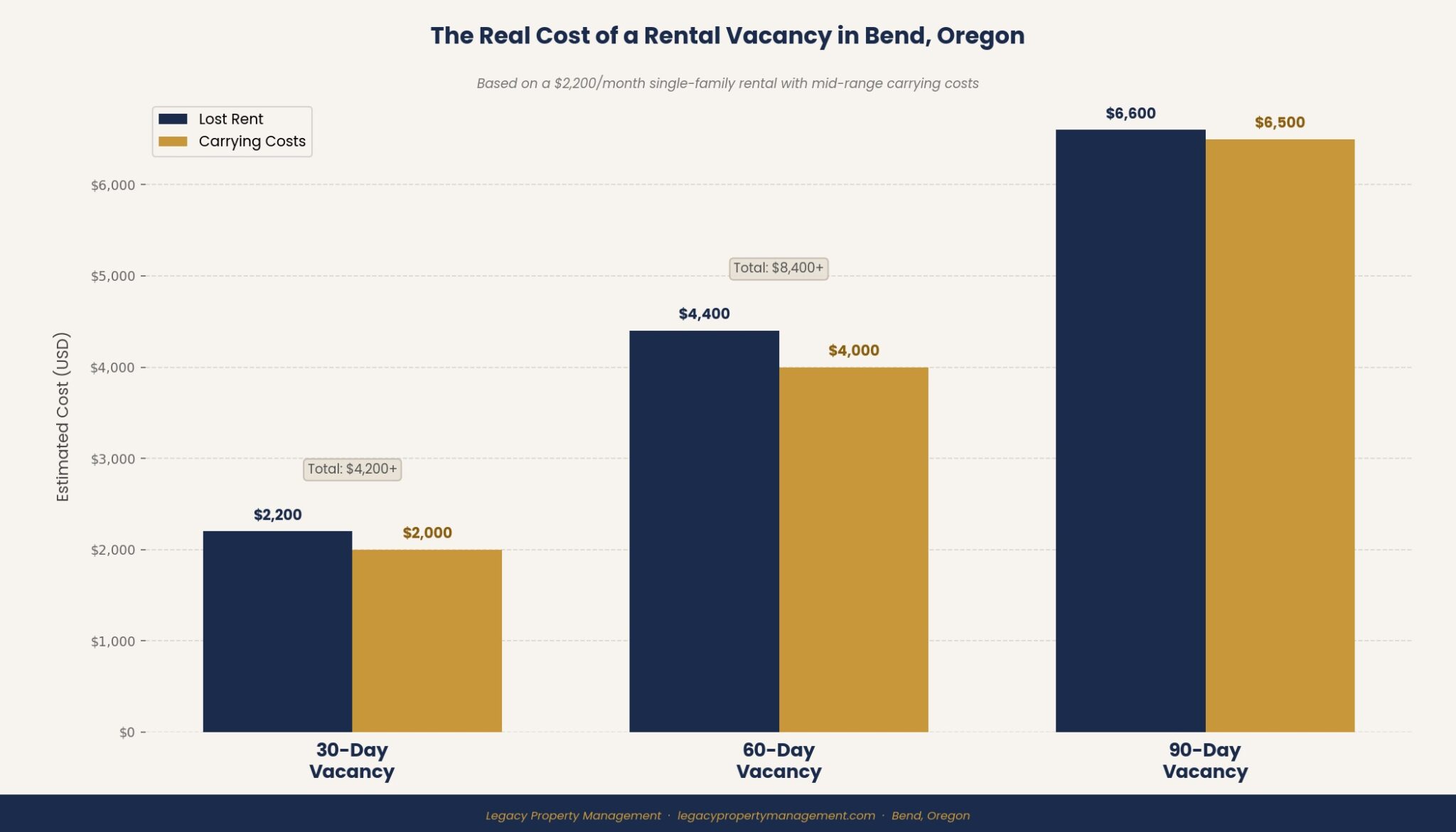
Carrying costs on a vacant property average between $1,500 and $3,000 per month when you factor in the mortgage, insurance, utilities, HOA fees (where applicable), and basic maintenance. Even 30 days of vacancy can erase a meaningful portion of a year’s profit margin. A 90-day vacancy, which is not unheard of in a softening rental market, can represent $10,000 to $14,000 or more in total financial exposure before you count any damage or incident costs.
For a Bend single-family home renting at $2,200 per month, that math gets uncomfortable fast. That’s why the goal isn’t just filling the vacancy quickly. It’s actively managing the property during the gap so you don’t pile additional costs on top of lost rent.
Insurance Gaps You Probably Don’t Know About
Most landlords assume their existing insurance policy covers them regardless of occupancy status. That assumption is expensive to test.
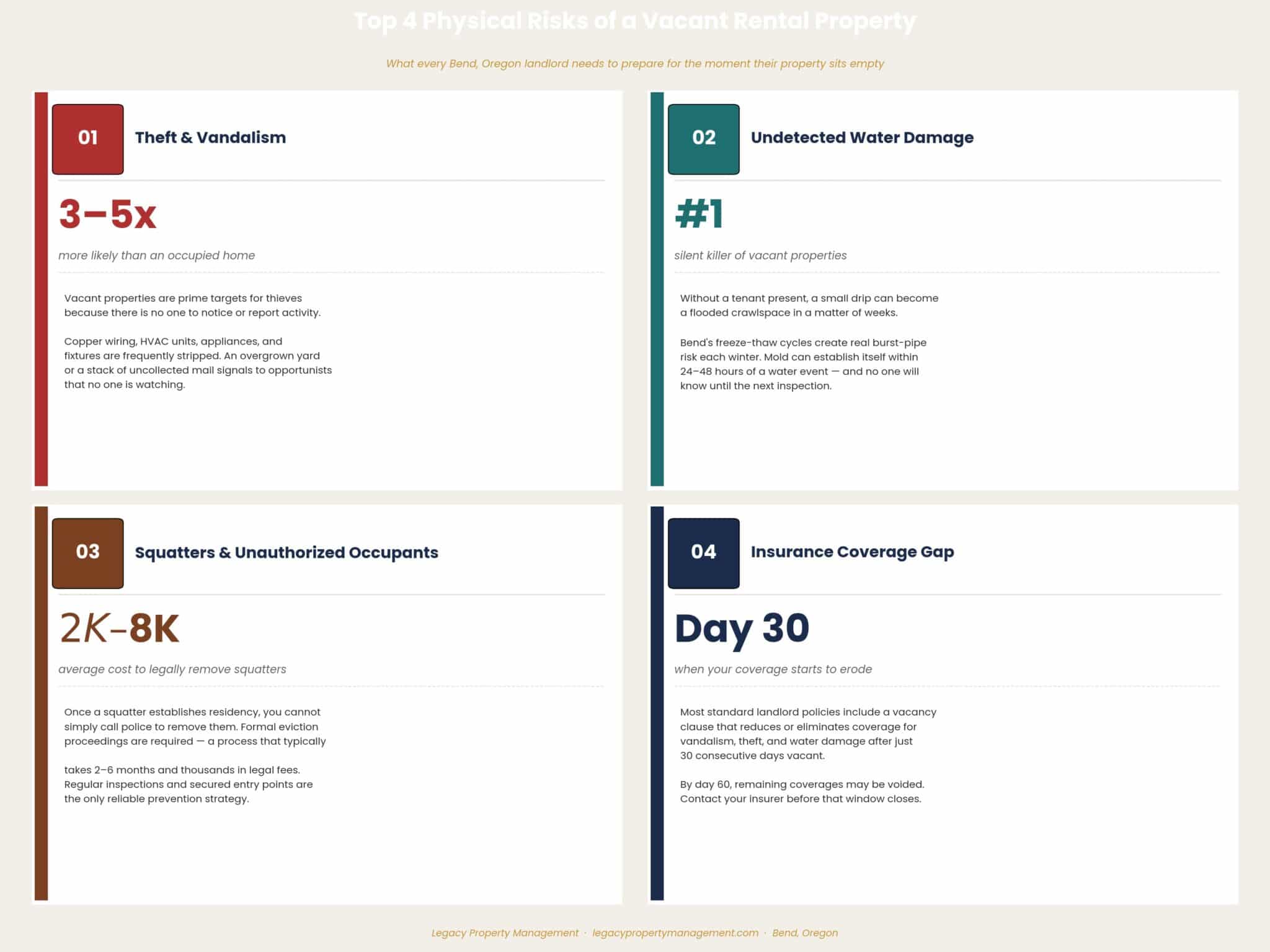
Standard landlord insurance policies typically include a vacancy clause that reduces or eliminates coverage after 30 to 60 consecutive days of vacancy. Once that threshold is crossed, your protection against vandalism, theft, and water damage often begins to shrink. By day 60, some policies void remaining coverages entirely.
Here’s what makes this especially tricky: your policy may trigger the vacancy clause the moment your tenant’s belongings are removed, not when the lease formally ends. That means your coverage gap can begin earlier than you expect.
If you anticipate your property will be vacant for more than 30 days, contact your insurer before that window closes. Ask specifically about:
- Vacancy endorsements added to your existing policy
- Standalone vacant property insurance policies built for this scenario
- Exactly how your policy defines “vacancy” and when that definition kicks in
The cost of a vacancy endorsement is a fraction of what a denied claim would cost you. It’s one of those steps that feels unnecessary right up until it isn’t.
Physical Risks Grow With Every Day
A vacant property is not a resting property. It’s an exposed one.
Research consistently shows that vacant properties are 3 to 5 times more likely to experience theft and vandalism compared to occupied homes. The reasons are straightforward: no one is watching, no one is reporting issues, and the visual signals of vacancy, things like overgrown landscaping, uncollected mail, and dark windows, tell opportunists everything they need to know.
In Central Oregon, the physical risks take on some local character. Bend’s climate means freeze-thaw cycles, heavy snow loads, and temperature swings that occupied tenants often catch early and report before they become serious. A slow pipe drip spotted in December can become a burst pipe, flooded crawlspace, and mold problem by February if no one is regularly checking the property. Undetected water damage has ruined more than a few otherwise solid investments.
There’s also the squatter issue. Once an unauthorized occupant establishes residency in a vacant property, the legal process to remove them is neither quick nor cheap. In most states, removing squatters requires formal eviction proceedings, which can stretch two to six months and cost $2,000 to $8,000 or more in legal fees. Prevention, through regular inspections and secured entry points, is the only reliable strategy.
The National Vacant Properties Campaign has documented that vacant properties can see crime rates nearly double those of occupied properties, including vandalism, theft, and arson. That statistic isn’t meant to alarm, but to reframe how seriously you treat an empty unit.
What Managing Vacant Properties in Bend Actually Looks Like
Reducing your exposure while a property sits empty comes down to a few concrete habits.
Regular Property Inspections
The single most effective thing you can do is visit the property on a consistent schedule. Bi-weekly is a reasonable baseline; weekly is better if the property has been vacant for more than 30 days or if there are known maintenance vulnerabilities.
During each visit, look for signs of unauthorized entry, check that all windows and doors are secure, test smoke and CO detectors, and walk the interior for any signs of water intrusion or pest activity. Documented photo inspections also protect you from unfounded claims if the property later changes hands or tenants.
Oregon landlord-tenant law (ORS 90.322) gives landlords broad access rights to vacant properties since there’s no tenant occupying the space. Use that access proactively.
Maintain Curb Appeal
This is not about vanity. A well-kept exterior communicates that the property is actively managed and monitored. Overgrown grass, accumulated debris, and an unkempt driveway are open invitations to vandals and squatters. In Bend, where landscaping shifts dramatically between seasons, keeping the exterior presentable through winter is particularly important.
Keep the grass mowed or the snow cleared depending on the season. Collect any mail or packages promptly, or redirect them. If the property will be vacant for an extended stretch, consider timer-controlled interior lighting to give the appearance of regular occupancy.
Secure the Property
Walk the property at the start of every vacancy and treat it like a pre-departure inspection. Deadbolt all exterior doors, lock all windows, check sliding doors and garage access points, and consider rekeying locks between tenants as a matter of routine.
For higher-value Bend properties or extended vacancies, a monitored security system is worth the monthly cost. Motion-activated exterior lighting is another simple deterrent that signals active management without requiring someone to be on-site.
Stay on Top of Systems
Bend’s winters are not mild. A vacant home without active monitoring of its mechanical systems can develop serious problems in weeks.
Keep heat at a minimum of 55 degrees Fahrenheit to prevent pipe freezing. Arrange for periodic checks of the HVAC system, especially filters and thermostat settings. Know where your main water shutoff is and who can access it in an emergency. If a freeze event is forecast and no one can monitor the property, it’s worth having a trusted vendor or property management contact on call.
Legacy PM’s article on A Year in the Life of a Rental Property: The Seasonal Guide to Property Management in Bend goes deeper on what Bend’s climate demands from property owners through each season.

Reducing the Duration of the Vacancy
Managing the risk of a vacant property is important, but the best version of managing vacant properties in Bend is shortening the vacancy itself.
Price It Right From Day One
The Bend rental market has more supply than it did three years ago, particularly in the multifamily segment. Overpricing a vacancy thinking you can come down later costs more than pricing it correctly at the start. The first two weeks on the market are when a listing gets the most organic attention. Sitting at the wrong price during that window can cost you a month of rent in days-on-market alone.
Our Bend Rental Market Report tracks current pricing trends across Central Oregon and can give you a data-backed starting point. You can also review our Average Rent in Bend Oregon: 2026 Analysis for broader context on where the market sits today.
List Early
Start marketing your property before the current tenant moves out. If you have a 30-day notice, begin advertising in week one. A professional property manager can begin showing the home to qualified applicants before the prior tenant leaves, provided the existing tenant is given proper notice under ORS 90.322.
Quality Tenant Screening
Reducing vacancy isn’t just about filling the unit faster. It’s about keeping it filled longer. The best strategy for avoiding another vacancy six months from now is placing a well-qualified tenant the first time. Our First-Time Landlord Checklist covers what to look for during the screening process and why it matters more than most landlords initially realize.
Thorough screening that includes income verification, credit history, rental history, and background checks is the foundation of long-term occupancy. Skipping steps to place someone quickly is almost always a decision that costs more in the end.
Make It Show-Ready
Presentation matters. A property that shows clean, bright, and well-maintained leases faster and at a stronger price point. Before listing, address deferred maintenance, deep clean the interior, and photograph the home in its best condition. Professional photography is not an extravagance for Bend rentals. It directly affects how many qualified applicants schedule showings.
What a Property Manager Actually Handles During Vacancy
One of the less obvious benefits of working with a property manager is what happens during the gap between tenants.
A good property manager handles the things most individual landlords don’t have the systems to manage consistently: scheduled property visits, maintenance coordination, active marketing, applicant screening, and lease preparation. They’re already connected to vendors, already familiar with what Bend’s climate demands from properties between tenants, and already doing this for multiple properties simultaneously, which tends to produce faster results.
Our property walk-through process at Legacy PM, which you can read about in The Walk-Through Most Property Managers Get Wrong, is specifically designed to catch the kinds of issues that become expensive if they’re missed during a vacancy.
Understanding what professional management actually costs, and what it prevents, is covered in detail in our guide on How Much Does Property Management Cost in Bend. Spoiler: the math often looks different once you account for what vacancy risk and deferred maintenance actually cost.
A Note on Longer Vacancies
If your property has been sitting vacant for more than 60 days, it’s worth reassessing the strategy rather than simply waiting it out.
Beyond the financial drain, extended vacancies create compounding problems. Insurance coverage continues to erode. Market perception of a long-listed property shifts, and applicant quality can decline as the listing ages. At 90 days, the IRS can also begin to scrutinize deductibility of holding expenses if the property is not actively being marketed and maintained.
The better path is almost always a pricing adjustment, a property condition refresh, or both, rather than simply holding the line and hoping the market comes to you.
Protecting Your Investment Is an Active Job
Managing vacant properties in Bend isn’t passive. It requires the same level of attention, arguably more, than a property that’s actively occupied. The difference is that with a tenant in place, you have someone at the property every day catching problems early. Without one, that responsibility falls entirely on you.
The good news is that with a clear protocol and realistic expectations about the Bend rental market, vacancy risk is manageable. Price correctly, inspect consistently, maintain your insurance coverage, and work with vendors and partners who know what Central Oregon properties need across the seasons.
At Legacy Property Management, we work with owners in Bend, Redmond, and Sisters to keep properties occupied, protected, and performing. When a vacancy does happen, we treat it as a managed transition, not a gap. Reach out to our team today to talk through your property’s situation and what a proactive strategy looks like.

OUR DIRECT CONTACT INFO
